
A Journey Into the Heart of the Himalayas
Bhutan is one of the world’s last great Himalayan sanctuaries—untouched, soulful, and profoundly inspiring. Tucked between India and China, this small landlocked kingdom offers travelers far more than scenic beauty. Bhutan is a place where spirituality guides daily life, nature is deeply protected, and happiness is considered a national goal.
Known locally as Druk Yul, the Land of the Thunder Dragon, Bhutan is a destination for those seeking meaningful travel—whether through high-altitude treks, ancient monasteries, vibrant festivals, or quiet moments in pristine valleys.
Why Bhutan Is Unlike Anywhere Else
Bhutan stands apart because it has chosen a different path. Instead of chasing mass tourism and rapid modernization, the country has carefully preserved its culture, environment, and identity.
- Over 70% forest cover, making Bhutan one of the world’s only carbon-negative countries
- Living Buddhist traditions practiced daily
- Strong architectural codes that preserve traditional design
- A national focus on well-being through Gross National Happiness
Every journey through Bhutan feels authentic, grounded, and deeply human.
Where Is Bhutan Located?
Bhutan lies in South Asia, along the eastern Himalayas. It is bordered by India to the south, east, and west, and China (Tibet Autonomous Region) to the north. Despite its compact size, Bhutan’s geography is remarkably diverse—ranging from subtropical plains to alpine mountains over 7,000 meters high.
This dramatic variation creates ideal conditions for:
- Trekking and hiking
- Wildlife viewing
- Cultural exploration
- Scenic road journeys
High Value, Low Volume Tourism
Bhutan follows a globally admired tourism philosophy known as High Value – Low Volume. The aim is simple: protect what makes Bhutan special.
Rather than mass tourism, Bhutan welcomes mindful travelers who respect local culture and nature. Visitors contribute through a Sustainable Development Fee (SDF), which supports:
- Environmental conservation
- Cultural preservation
- Education and healthcare
- Community development
This approach ensures tourism benefits both travelers and Bhutanese communities—without compromising the country’s soul.
Gross National Happiness (GNH)
Bhutan is the birthplace of Gross National Happiness (GNH)—a visionary development philosophy that values quality of life over economic growth alone.
Introduced by the Fourth King, GNH measures national progress across areas such as:
- Psychological well-being
- Health and education
- Cultural resilience
- Environmental sustainability
- Good governance
This belief system shapes policies, lifestyles, and even tourism—making Bhutan one of the most mindful nations on Earth.
Bhutan at a Glance
Royal Family
The Bhutanese monarchy is deeply respected and loved, symbolizing unity, humility, and continuity.

Religion
Vajrayana Buddhism is central to Bhutanese identity, influencing art, festivals, architecture, and everyday life.
National Symbols
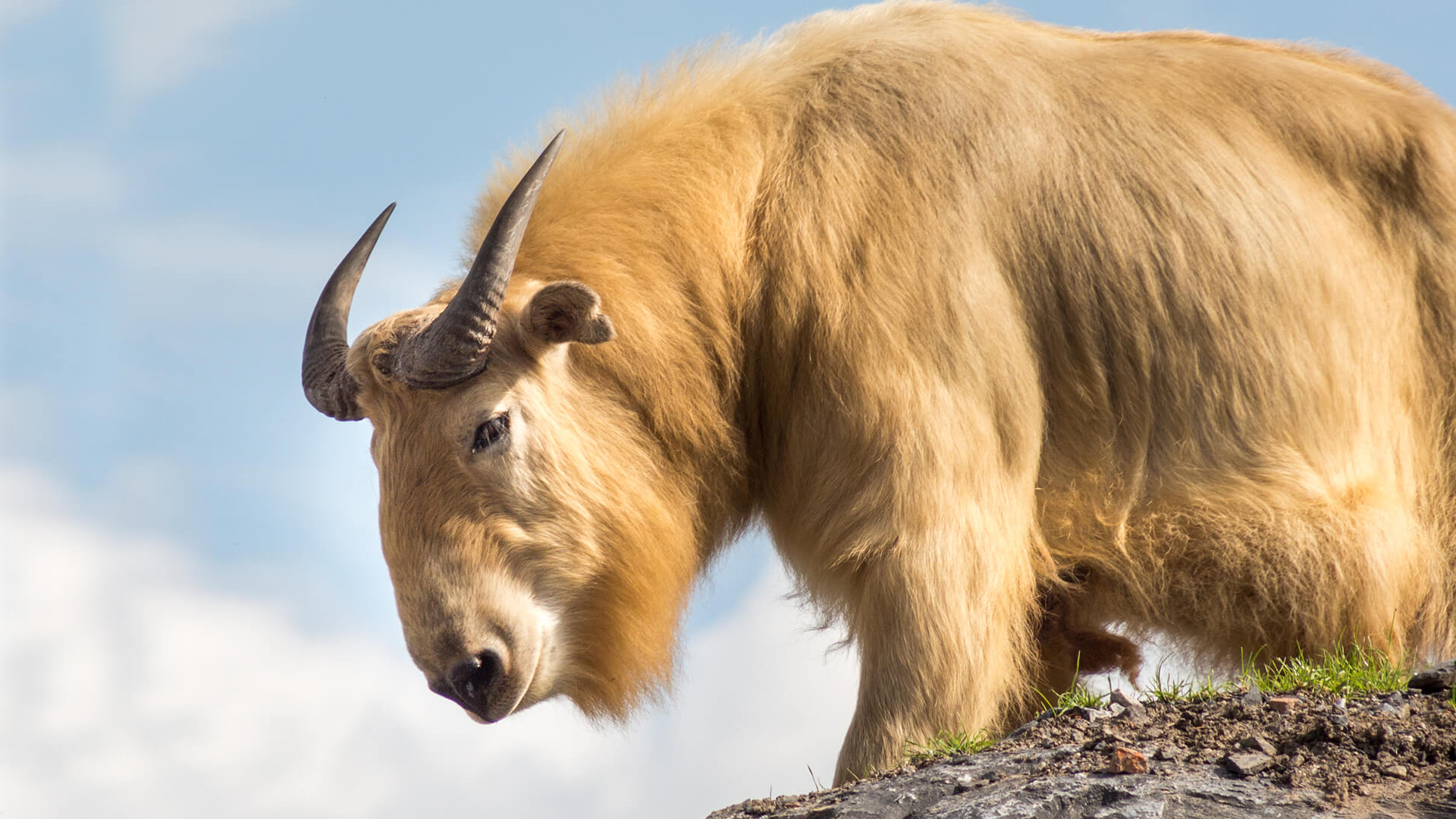
- National Animal: Takin
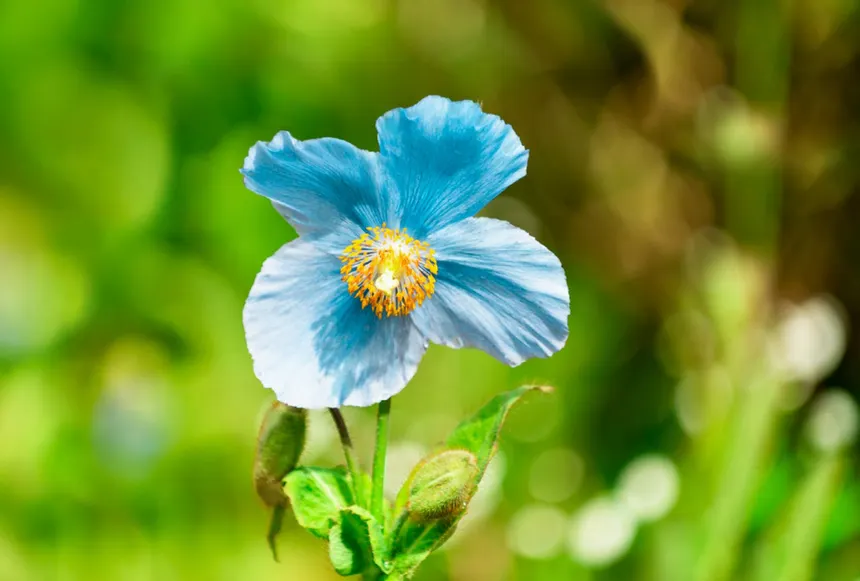
- National Flower: Himalayan Blue Poppy
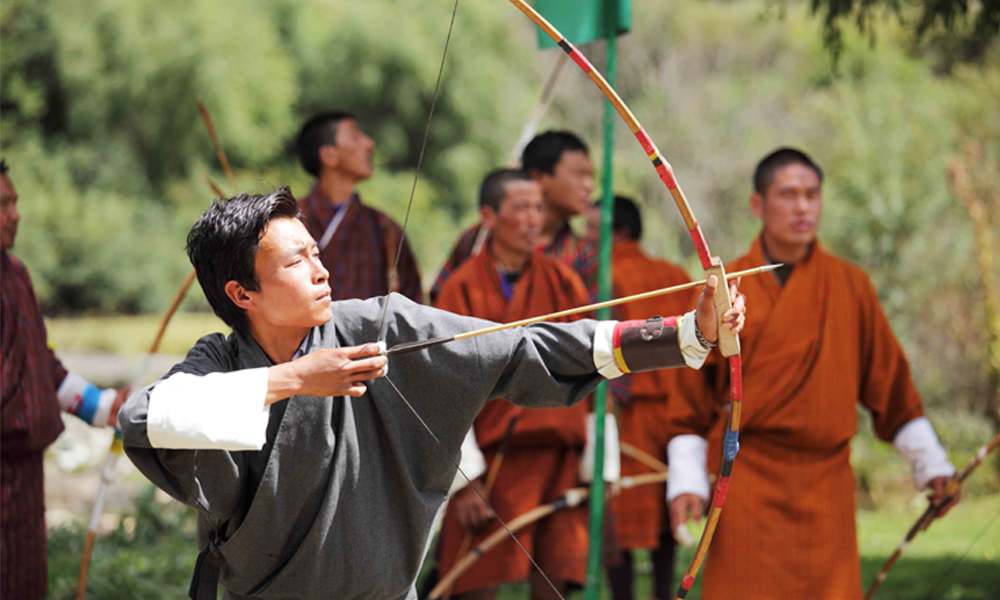
- National Sport: Archery
Language
- Official: Dzongkha
- Regional languages: Sharchopkha (Tshanglakha), Lhotshamkha
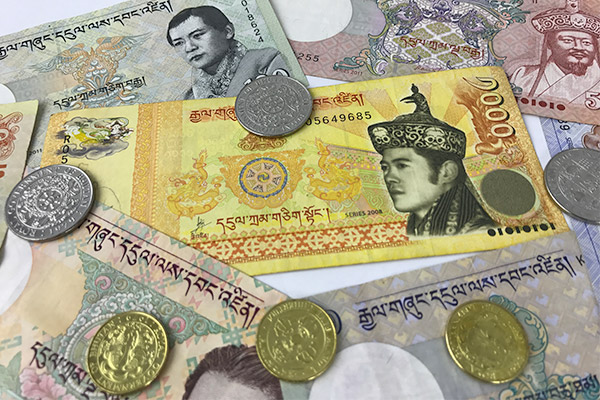
Currency
Bhutanese Ngultrum (BTN)
Best Time to Visit
- Spring (Mar–May): flowers, trekking
- Autumn (Sep–Nov): festivals, clear skies
- Winter & Summer offer unique regional experiences
Wildlife & Nature Conservation

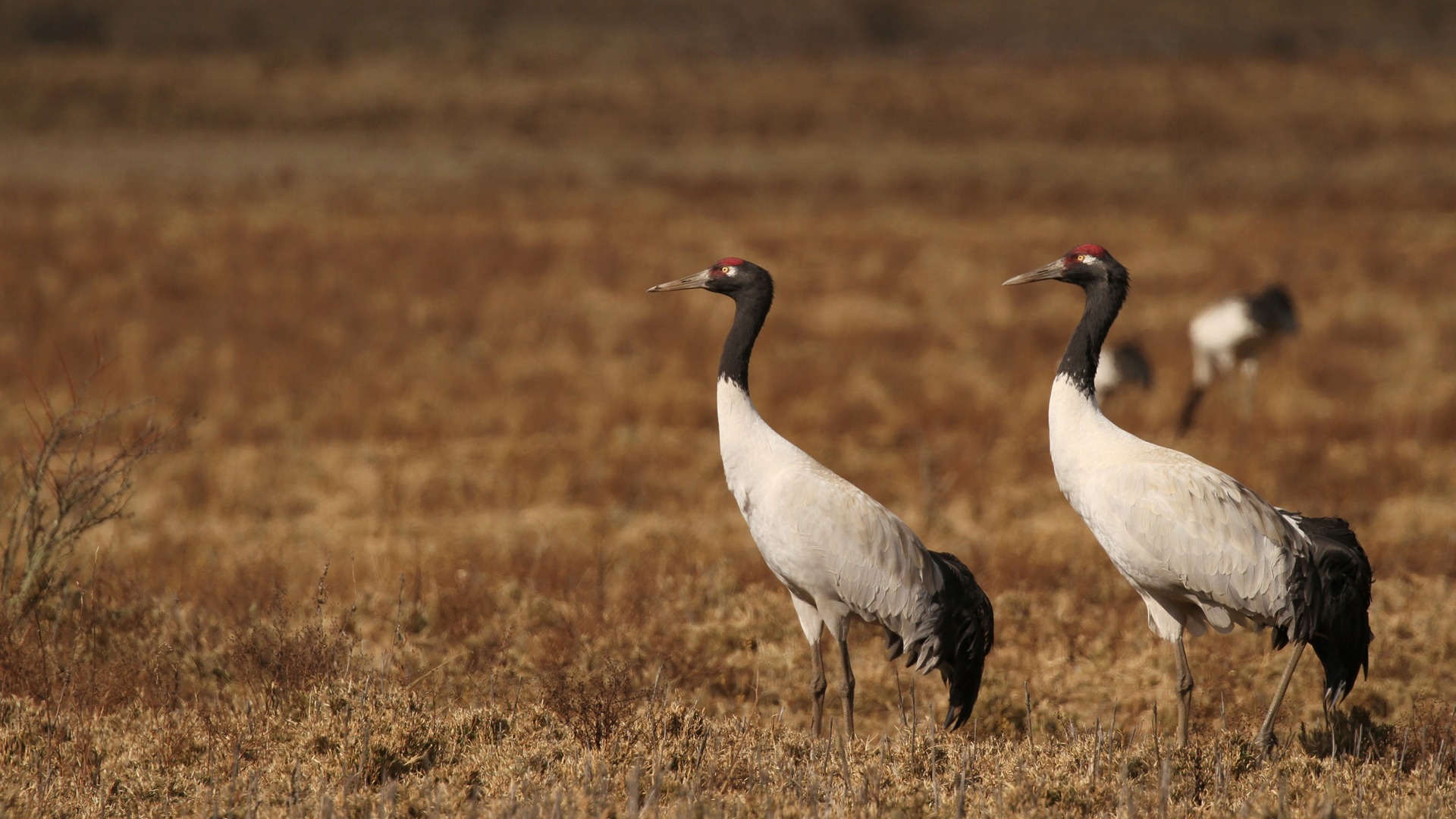

Bhutan is a global leader in conservation, with more than half the country protected through national parks, wildlife sanctuaries, and biological corridors.
Wildlife Highlights
- Takin (national animal)
- Snow leopard
- Red panda
- Himalayan black bear
- Blue sheep, musk deer, yaks
Birdlife
With over 600 bird species, Bhutan is a paradise for birdwatchers. Iconic species include the sacred raven and the endangered black-necked crane, which migrates to Bhutan each winter.
Bhutan’s conservation success lies in its philosophy: humans and nature must coexist in balance.
Sacred Architecture of Bhutan


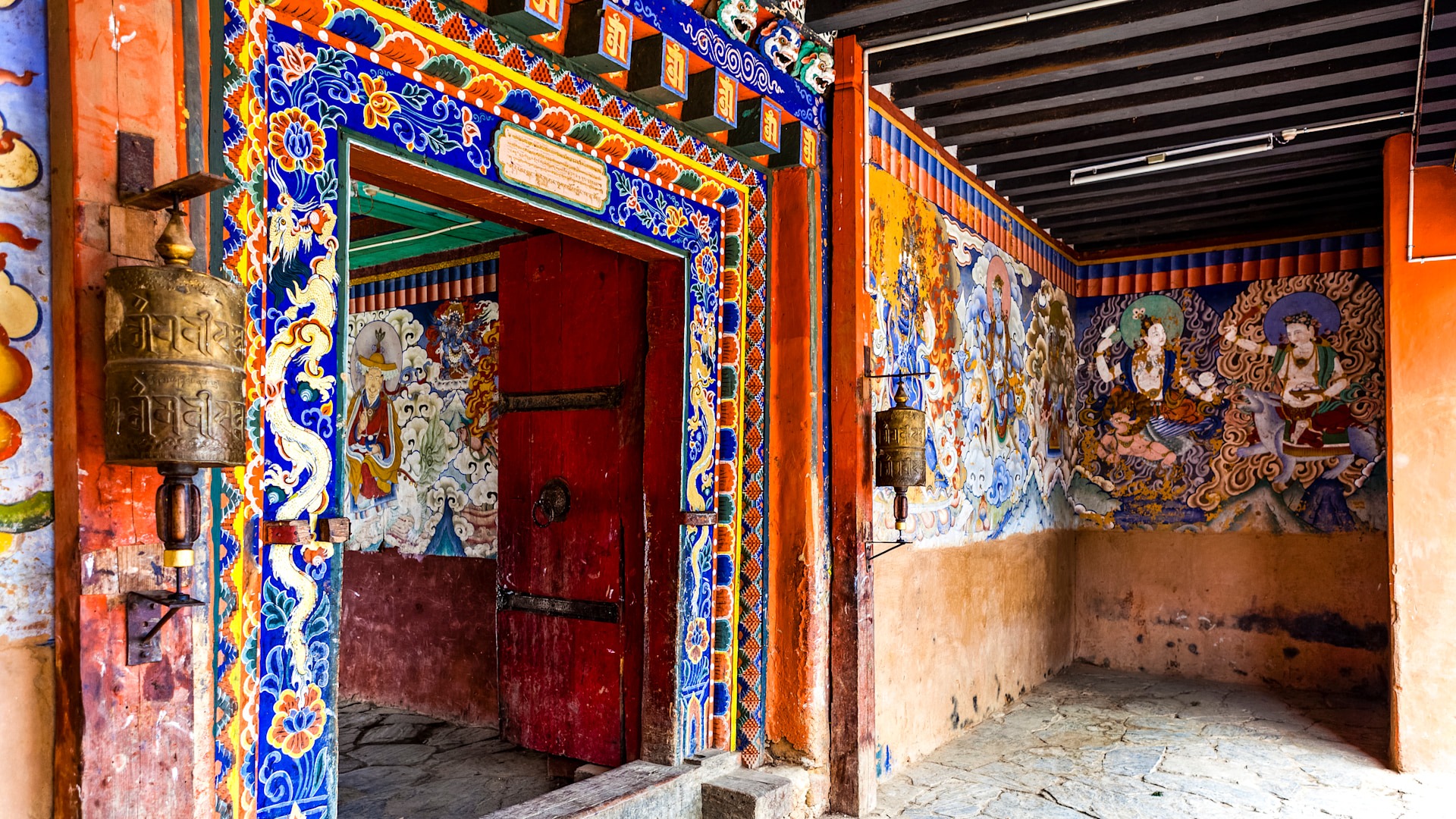
Dzongs
Massive fortress-monasteries that function as administrative and religious centers. Built using stone, timber, and traditional techniques, dzongs are among Bhutan’s most iconic landmarks.
Lhakhangs
Local temples with golden roofs and intricate murals. These sacred spaces are central to community worship and spiritual practice.
Goembas
Monasteries often perched in remote mountains or forests. Goembas are centers of meditation, learning, and monastic life—offering travelers rare insight into Bhutanese spirituality.
Travel Bhutan with Bhutan Backpackers
Bhutan is not a checklist destination—it’s a transformational journey. With Bhutan Backpackers, you experience the country beyond the surface:
- Responsible and sustainable travel
- Authentic local experiences
- Flexible itineraries for explorers and backpackers
- Deep cultural and nature immersion
From high Himalayan trails to quiet village paths, Bhutan invites you to slow down, reconnect, and travel with purpose.
Discover Bhutan. Travel mindfully. Experience happiness differently.