
How Bhutan’s Microclimates Shape Your Adventure
Bhutan’s elevation swings from 200 m in the south to over 7,500 m in the north, creating distinct climate zones. A sunny morning in Thimphu can turn into a humid afternoon in Phobjikha—knowing your zone ensures you choose the right activities and gear.
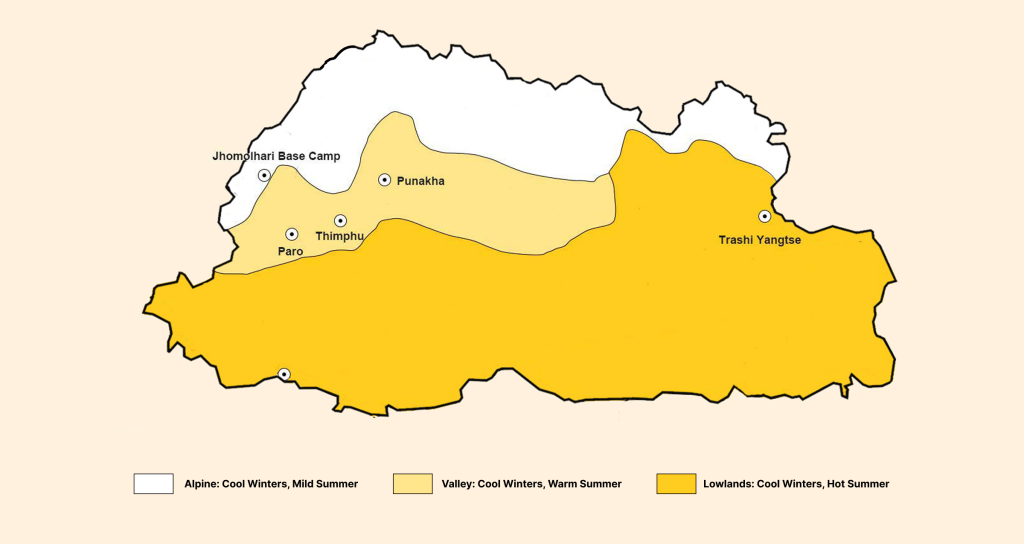
Western Highlands (Thimphu & Paro)
Winters here are crisp (–2 °C to 12 °C), and summers stay mild (12 °C–20 °C). Spring and autumn are prime trekking seasons; trails drain quickly after brief rains, offering reliable footing for high-altitude routes.
Central Valleys (Punakha & Wangdue)
Punakha enjoys warm winters (15 °C–25 °C) and heavy monsoon rains in June–August—pack waterproof gear if you visit in summer. The valley’s warmth makes it perfect for exploring Punakha Dzong or rafting on the Mo Chhu.
Highland Plateaus (Bumthang & Central Bhutan)
Bumthang mornings in winter dip to 5 °C, but clear sunny afternoons can reach 18 °C. Low humidity and open skies create spectacular conditions for sunrise photography at Jakar Dzong.
Eastern Lowlands
This subtropical zone delivers daily downpours in the monsoon (June–Sept) and highs up to 30 °C. Ideal for festivals like the Lhuentse Tshechu, but serious rain gear is a must if you trek into the hills.
Quick Tip: Always check a 48-hour, elevation-specific forecast on the Bhutan Met Service before you finalize your packing.
Next Steps: • Pick your season → Best Time to Visit Bhutan • Pack for zones → Bhutan Packing Checklist • Arrange transport → Bhutan Transportation Guide
SEO Keywords: Bhutan weather by region · Bhutan climate guide · Bhutan microclimates